
Health Insurance in Cebu
Health insurance in Cebu, like in the rest of the Philippines, provides financial protection against medical expenses, but the local market is shaped by the cit
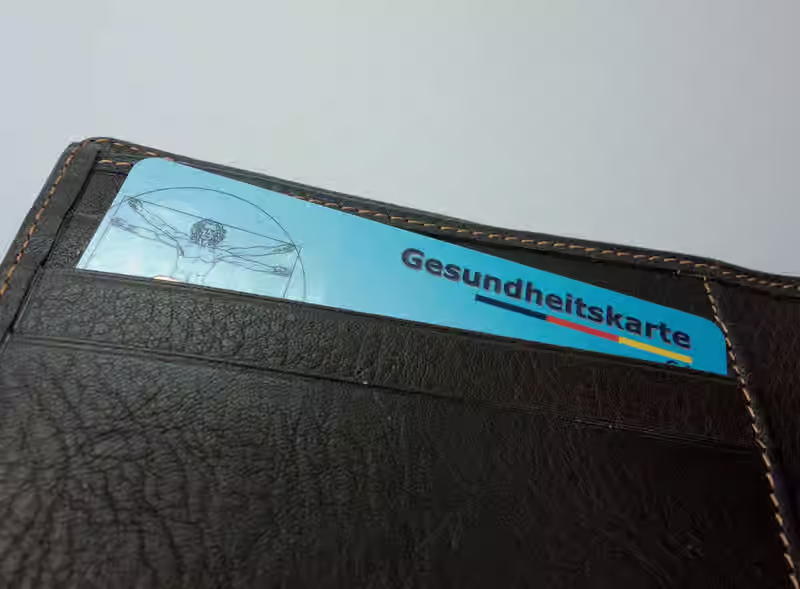
Health insurance in Cebu, like in the rest of the Philippines, provides financial protection against medical expenses, but the local market is shaped by the city’s mix of public and private healthcare facilities, a growing expat community, and a range of HMO (Health Maintenance Organization) and traditional insurance options. The most practical way to get coverage in Cebu is through employer-sponsored plans, private HMO cards like Maxicare or Intellicare, or government programs like PhilHealth, each with distinct costs, coverage limits, and provider networks. This article will explain how health insurance works in Cebu, what to expect in terms of premiums and benefits, and how to choose the right plan for your needs.
How Health Insurance Works in Cebu

Health insurance in Cebu operates through two main systems: government-mandated PhilHealth and private insurance or HMO plans. PhilHealth is a national social health insurance program that covers basic inpatient and outpatient services, but it typically covers only a portion of costs—often 30% to 50% of hospital bills—leaving members to pay the rest out-of-pocket or through supplemental private insurance. For example, a standard PhilHealth coverage for a hospital confinement might cap at around PHP 50,000 per case for certain procedures, but actual bills at private hospitals in Cebu City, like Chong Hua Hospital or Cebu Doctors’ University Hospital, can exceed PHP 200,000 for a major surgery.
Private HMO plans, such as those offered by Maxicare, Intellicare, or Medicard, function as prepaid health cards. Members pay a monthly or annual premium, and in return, they get access to a network of accredited doctors, clinics, and hospitals in Cebu. These plans often cover routine check-ups, lab tests, and emergency consultations, but they have annual limits—commonly between PHP 100,000 and PHP 500,000. For major medical conditions like cancer or heart surgery, traditional health insurance policies from companies like AXA or Sun Life provide higher coverage limits, often up to PHP 1 million or more, but they require medical underwriting and have higher premiums.
Key Factors That Affect Health Insurance Costs in Cebu
Premiums for health insurance in Cebu vary widely based on age, health status, coverage level, and the type of plan. For a healthy 30-year-old, an HMO plan with outpatient and inpatient benefits might cost around PHP 1,500 to PHP 3,000 per month, while a comprehensive traditional insurance policy could range from PHP 2,500 to PHP 5,000 monthly. Older individuals, especially those over 50, face significantly higher premiums—often double or triple those rates—because of increased health risks.
Another major factor is the hospital tier. Cebu has a mix of public hospitals (like Vicente Sotto Memorial Medical Center) and private hospitals (like Perpetual Succour Hospital or Cebu Doctors’). Private hospitals in Cebu City generally have higher room rates and doctor fees. For instance, a semi-private room at a private hospital can cost PHP 2,500 to PHP 4,000 per day, while a public hospital ward may be as low as PHP 500 per day. Insurance plans that cover private hospitals or offer “direct billing” (where the insurer pays the hospital directly) tend to have higher premiums but reduce out-of-pocket stress.
Expatriates living in Cebu face additional considerations. Many international health insurance providers, like Cigna or Allianz, offer global plans that cover the Philippines, but these can cost USD 100 to USD 300 per month for comprehensive coverage. Local plans may be cheaper but often have limited English-language support or narrower networks. It is important to check whether a plan covers evacuation to a hospital in Manila or Singapore for serious conditions, as some local plans may not include this.
Comparing Health Insurance Options in Cebu
To make an informed choice, consider the following comparison of common health insurance types available in Cebu:
| Plan Type | Typical Monthly Premium (PHP) | Annual Coverage Limit | Key Features |
|---|---|---|---|
| PhilHealth (government) | Varies by income (approx. PHP 400–PHP 2,400 per year) | Capped per case (e.g., PHP 50,000 for surgery) | Basic inpatient coverage, low cost, but limited hospital network and high co-pays |
| HMO (e.g., Maxicare, Intellicare) | PHP 1,500–PHP 5,000 | PHP 100,000–PHP 500,000 per year | Outpatient and inpatient, direct billing at accredited clinics, no medical exam usually |
| Traditional health insurance (e.g., AXA, Sun Life) | PHP 2,500–PHP 10,000+ | PHP 500,000–PHP 2 million per year | Higher limits, covers major illnesses, requires medical underwriting, may have waiting periods |
| International/Expat plan (e.g., Cigna, Allianz) | USD 100–USD 300 (approx. PHP 5,500–PHP 17,000) | USD 1 million+ | Worldwide coverage, evacuation benefits, English support, but expensive |
When choosing, prioritize plans that include direct billing at major Cebu hospitals like Chong Hua or Cebu Doctors’, as this simplifies claims. Also, check if the plan covers pre-existing conditions—most HMOs exclude them for the first 6 to 12 months, while traditional insurance may exclude them entirely or charge higher premiums.
How to Choose the Right Health Insurance Plan in Cebu
Start by assessing your healthcare needs. If you are a young, healthy individual who only visits a doctor for occasional check-ups, an HMO plan with a PHP 150,000 annual limit may be sufficient and affordable. For families or those with chronic conditions, a traditional insurance plan with a higher limit (PHP 1 million or more) is advisable, even though it costs more. Always verify the network of accredited providers in Cebu—some HMOs have limited lists, forcing you to pay upfront and file claims later, which can be inconvenient.
Read the fine print on exclusions. Common exclusions in Philippine health insurance include dental care, vision correction, cosmetic surgery, and alternative medicine. Some plans also have a “coordination of benefits” clause, meaning if you have both PhilHealth and private insurance, the private insurer may reduce their payout based on what PhilHealth already covered. For example, if a hospital bill is PHP 100,000 and PhilHealth covers PHP 30,000, a private HMO might only cover the remaining PHP 70,000 up to its limit, but some plans have a “first payer” rule that complicates this.
For expats, consider whether you need coverage for medical evacuation to a higher-level facility in Manila or abroad. Some local plans do not include this, but international plans often do. Also, check if the plan covers routine vaccinations or emergency dental, as these are common needs. Finally, compare premiums from at least three providers—use online comparison tools or consult a local insurance broker in Cebu who can explain the nuances of each policy.
Frequently Asked Questions About Health Insurance in Cebu
Can I use PhilHealth alone for major surgery in Cebu?
PhilHealth alone is rarely enough for major surgery at a private hospital in Cebu. For example, a coronary artery bypass graft can cost PHP 500,000 or more, but PhilHealth’s coverage for such a procedure might be around PHP 50,000 to PHP 100,000. You would still need to pay the remaining balance or rely on private insurance. PhilHealth is best used as a supplement, not a primary coverage.
Do HMO plans in Cebu cover pre-existing conditions?
Most HMO plans in Cebu have a waiting period of 6 to 12 months for pre-existing conditions, and some exclude them entirely. For example, if you have diabetes, an HMO might not cover related hospitalizations for the first year. Traditional health insurance policies may offer coverage for pre-existing conditions after a longer waiting period (e.g., 2 years) but at higher premiums. Always disclose your medical history to avoid claim denials.
Is health insurance in Cebu expensive for expats?
It depends on the plan. Local HMO plans for expats can cost PHP 2,000 to PHP 5,000 per month, but they may have limited networks and no evacuation coverage. International plans are more expensive (USD 100–300 per month) but offer global coverage and better support. Many expats in Cebu choose a local HMO for routine care and an international plan for major emergencies.
Health insurance in Cebu is not a one-size-fits-all solution, but understanding the local market—from PhilHealth’s basic coverage to private HMOs and international plans—empowers you to make a smart financial decision. Start by evaluating your health needs, budget, and preferred hospitals, then compare plans with realistic expectations about costs and coverage limits. Whether you are a local resident or an expat, securing the right health insurance in Cebu can save you from significant financial strain during a medical emergency.